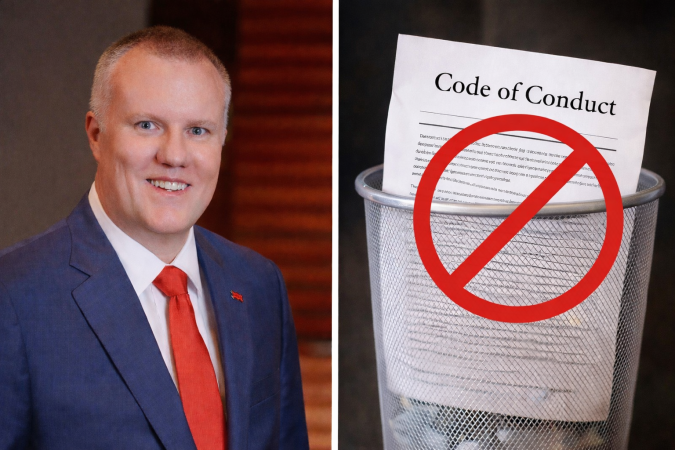


A Look at Four Frisco Chronicles Hit Pieces
Public debate only works when people engage the issue. But when someone exposes uncomfortable facts like I documented in Transparency Matters some actors don’t respond with evidence. They respond with personal attacks.
That’s exactly what happened in the four Frisco Chronicles articles targeting me. Instead of addressing the substance of the transparency concerns, each piece leans on ad hominem attacks and bully‑style framing designed to intimidate, distract, and discredit.
1. “Fair Play”: Attacking the Messenger, Not the Message
This article doesn’t challenge a single fact from Transparency Matters. Instead, it tries to smear me by labeling, mocking, and assigning motives. That’s textbook ad hominem:
- Ignore the evidence
- Attack the person presenting it
- Hope readers never notice the lack of rebuttal
When someone’s first move is name‑calling, it’s because they can’t argue the facts.
It also has a lengthy list of every day citizens that happened to like the post. Some are involved within the city, some are not. In any case this is a pure attempt at intimidation. Nothing more.
2. “Tracie’s Bill’s Hypocrisy”: Manufactured Narratives as a Substitute for Proof
Rather than engaging with the transparency issues raised, this piece invents a storyline about “hypocrisy” and tries to tie me to unrelated drama. It’s a classic bully tactic:
- Create a caricature
- Attack the caricature
- Pretend the caricature is the real person
It’s easier to fight a strawman than to address real concerns about accountability in local government. And if you want hypocrisy, they are the hypocrites. They wrote articles about prior candidates using the City logo, made a big deal about it, but when their candidate uses the logo and gets called out, they defend the candidate when they should have been agreeing the candidate shouldn’t have used the logo. THAT’S hypocrisy.
3. “Bill’s Revenge Tour”: Emotional Framing to Avoid Substance
Calling my work a “revenge tour” is an attempt to delegitimize the motive so they don’t have to address the content. This is emotional manipulation masquerading as commentary.
The article never disputes the facts I published. It simply tries to convince readers that facts don’t matter because the person presenting them supposedly has a “vendetta.”
That’s not journalism. It’s character assassination.
4. “The Chihuahua’s Political Hit Piece”: Mockery as a Shield Against Accountability
When an outlet resorts to mocking nicknames, it’s because they’ve run out of arguments. This article uses ridicule as a weapon — a classic bullying move — to distract from the transparency failures I highlighted.
Mockery is not a rebuttal. It’s a smokescreen.
Why These Tactics Matter
Ad hominem attacks aren’t just empty they’re strategically designed to:
- Shift attention away from the facts
- Discredit the person raising concerns
- Intimidate others from speaking up
- Protect the group from scrutiny
When bloggers behave like a schoolyard bully, the community loses. We deserve debate based on evidence, not personal smears.
The Bottom Line
None of these four articles refute a single claim in Transparency Matters.
Not one.
Instead, they rely on:
- Name‑calling
- Mockery
- Motive‑assigning
- Character attacks
- Manufactured narratives
These are the tools of people who cannot defend their position on the merits.
Transparency isn’t a “hit piece.”
Accountability isn’t a “revenge tour.”
And calling someone names doesn’t make the truth disappear.
If anything, the intensity of these attacks only reinforces the point:
Some people really don’t want the public asking questions.
If “Hal” wants to meet me in public and have a public discussion about any or all of his posts, or mine, I’ll meet him. The problem? He won’t. I believe there are others writing these articles, and just as in his deposition, he won’t have answers for the questions I’d ask.